
We are excited to present a groundbreaking declaration that embodies the collective efforts and unwavering commitment of the Scaling up Nutrition Civil Society Network (SUN CSN). Titled “Reclaiming Our Food System: 4 Principles to Prioritize,” this declaration sets forth a transformative vision to address the pressing challenges faced by our global food and agricultural systems. […]
ReadAll Advocacy news
Select any topics you are interested in to filter news articles.
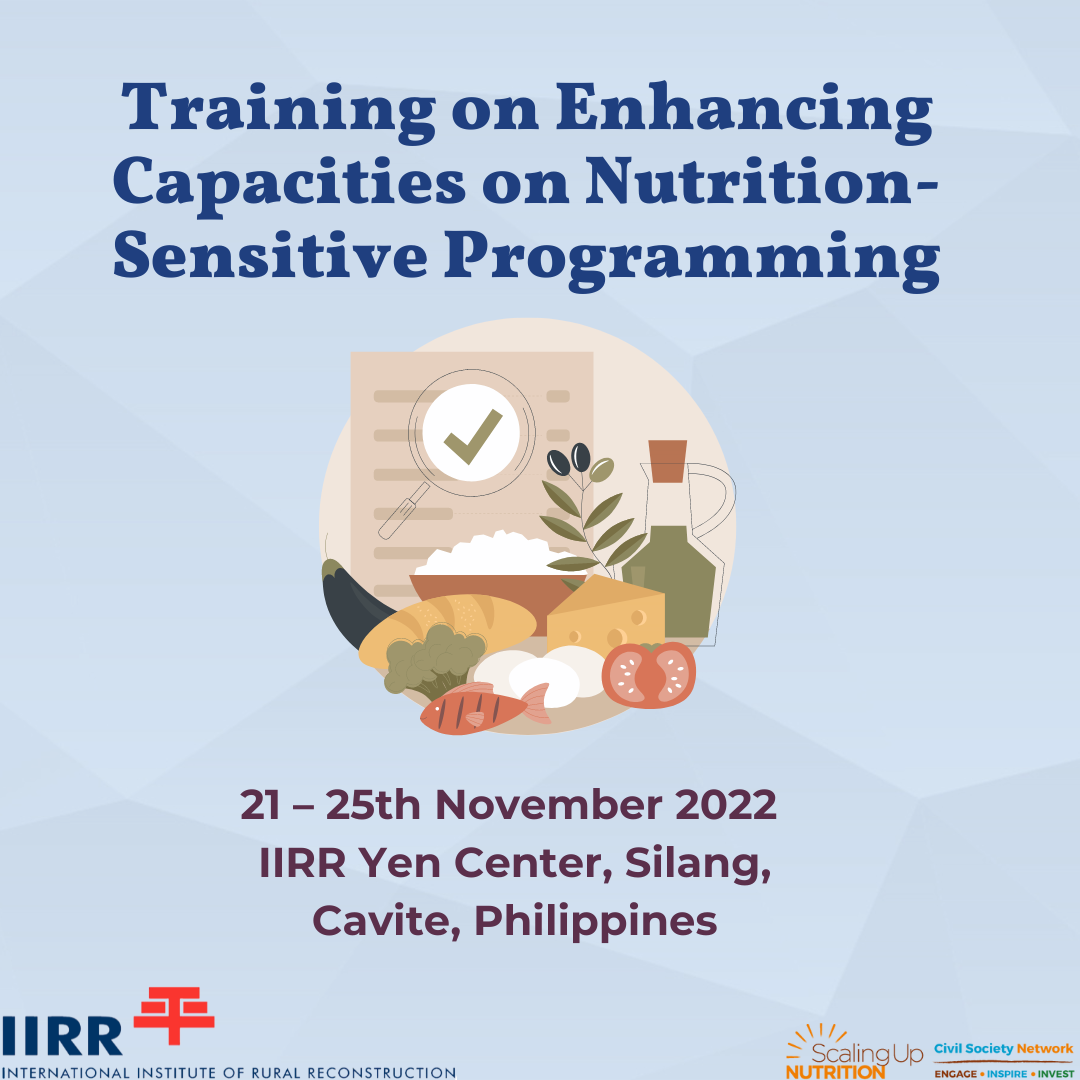
Nutrition Sensitive training in the Philippines – A Tale of Experience
A photoblog by Georgine Obwana – CSA Uganda In this ever-changing world, it is necessary to keep updating yourself, your knowledge, and your intellect, to keep up with the continuous growth and development taking place. This is exactly why the one week blended international course on Enhancing Capacities on Nutrition – Sensitive programing (NSP) has […]
ReadThe Small Grants Programme Report is here!
Since 2018 SUN CSN has run a small grants programme, which invites interested & eligible CSAs and their members to apply for small grants, to implement and pilot small projects for research or innovation purposes over a 6-month period. Between 2018 – 2022 The SUN CSN Small Grants Programme has run four cycles of funding […]
ReadWe are all accountable
One year on from the Nutrition for Growth (N4G) summit, SUN CSN launches a social accountability campaign to hold stakeholders to account for promises made. The SUN Civil Society Network, along with the support of network members and global partners, want to see that the bold commitments we all made for nutrition become a reality! […]
Read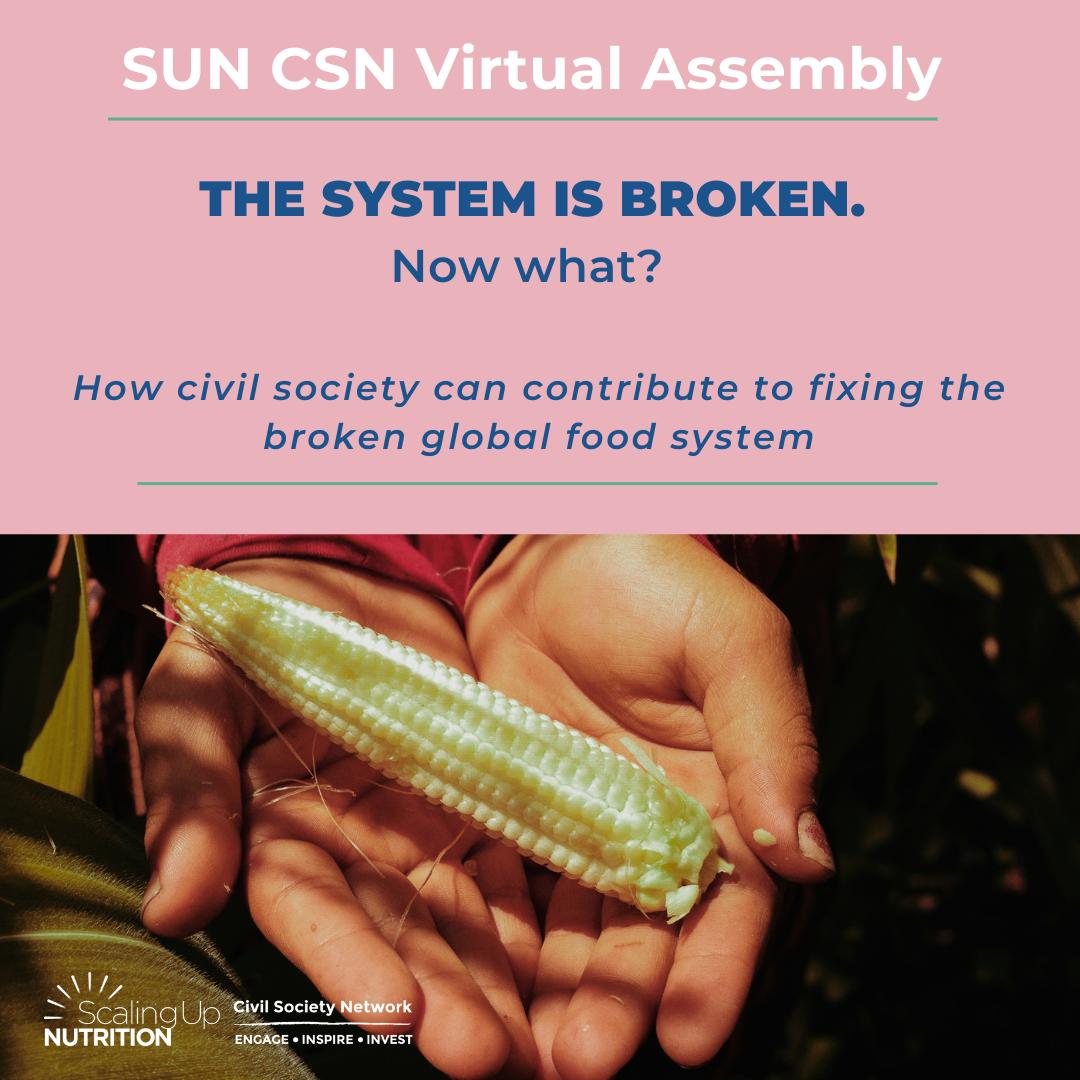
The system is broken, now what? Five things we can do to make our advocacy demands a reality.
This September 2022, our members gathered again for a Virtual Assembly, the second of its kind. The objective was to agree upon the practical steps to deliver on a set of advocacy demands that emerged through a consultative process after our first virtual assembly. With the overarching goal to mitigate the impact of ongoing and […]
Read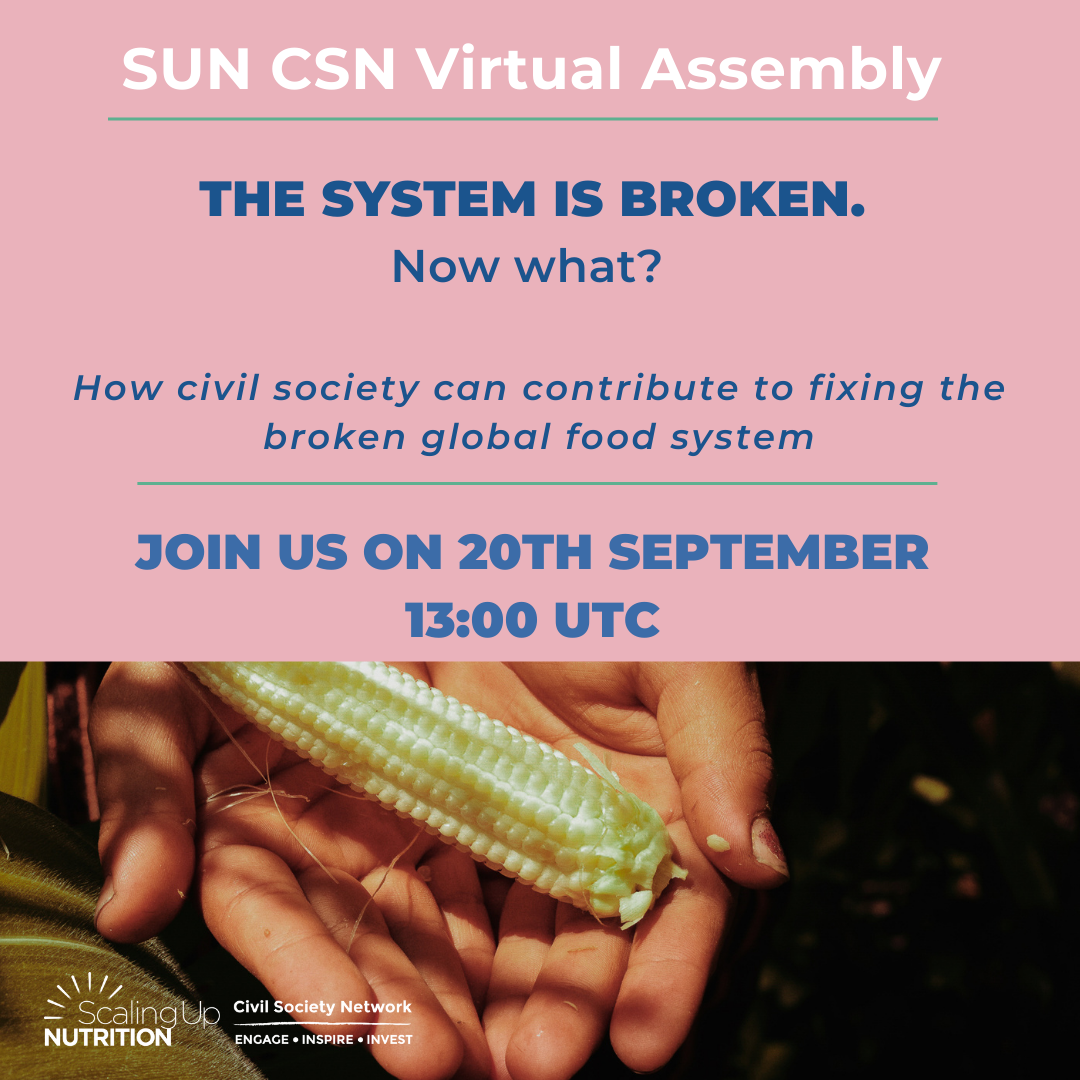
Get Involved with the Latest CS Network Assembly!
Our first ever network-wide Virtual Assembly took place in May against the backdrop of ongoing global crises, which have seen food prices rise and access to adequate nutrition further diminished. Together, CSN members discussed how communities have been impacted and what we needed to change in the global food system to mitigate the impact of […]
ReadTraining on Enhancing Capacities on Nutrition-Sensitive Programming
November 15-16th 2022 (virtual) 21 – 25th November 2022 (in-person) IIRR Yen Center, Silang, Cavite, Philippines Application deadline: 27th September Malnutrition and hunger continue to afflict children and adults alike across the world, affecting their growth, development, and productivity. If unaddressed, undernutrition has serious short and long-term consequences for a child’s development. Access to, and […]
Read
Three things we learnt from the first Civil Society Network assembly
This week saw over 60 members of the SUN Movement’s Civil Society Network (CSN) come together from countries all around the globe in the first ever network-wide assembly to discuss experiences and solutions surrounding the current global food crisis and to create tangible advocacy demands as a network. The discussion was full of ideas and […]
ReadThe SUN CSN to host its first network-wide assembly on global crises
Summary The Civil Society Network Secretariat (CSNS) plans to organise a series of meetings with CSN Members to come together and share experiences and perspectives on how the global commodity price increases are impacting nutrition in different contexts. The event on May 25th will be offered as the first of an ongoing series of global […]
Read
SUN CSA Vietnam goes digital! How AI technology is helping to fight Code violators in Vietnam.
Our Civil Society Alliance in Vietnam, led by Alive & Thrive, and thanks to FHI Solutions’ Innovation Incubator, have teamed up with artificial intelligence (AI) company Hekate. Their aim? To try and end exploitative marketing of commercial milk formula and related products within the scope of the BMS code, on the digital frontline. Hekate, a […]
ReadSubmit news article
If you’re part of a SUN Civil Society Network and want to share a news article, submit it by filling in the contact form and selecting “Submit a news article in “Reason for contact” so that we can review and publish it.
Our Civil Society Alliance in Vietnam, led by Alive & Thrive, and thanks to FHI Solutions’ Innovation Incubator, have teamed up with artificial intelligence (AI) company Hekate. Their aim? To try and end exploitative marketing of commercial milk formula and related products within the scope of the BMS code, on the digital frontline. Hekate, a company keen to bring AI technology to social impact projects, has worked closely with civil society partners to create an exciting new tool that uses AI to identify BMS code violations in the digital sphere.
In recent years we have seen companies that manufacture and distribute commercial milk formula and other products under the scope of the Code move away from a traditional marketing plan. The recently launched WHO report zooms in on BMS marketing on digital platforms, and finds that over 80% of exposure to BMS advertisements occurs online in some countries. Some of them do not overtly appear as advertisements, including baby clubs, advice for parents, and online registrations, with the aim to obtain personal information for marketing purposes. Apart from increasing BMS sales, practices as such make Code monitoring extremely challenging.
In Vietnam, the government put in place Decree 70 in 2021, stating that online platforms had to report annually on their advertisement violations and remove said violations within 24 hours when requested to do so.
To keep up with these changing times, SUN CSA Vietnam took the opportunity to meet the challenges of the digital world with an equally technology-driven tool. Vivid (Virtual Violations Detector), is a digital assistant that scans websites, social media channels and shopping platforms to identify adverts which violate the BMS code. Using key text and image recognition, the platform can identify posts which may be violations and match those to specific provisions of the Code.
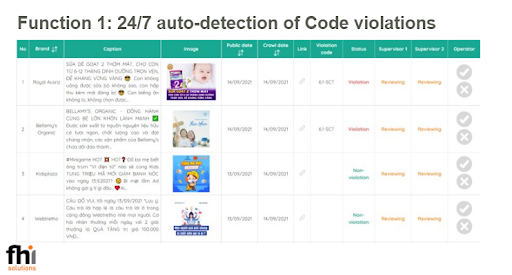
The platform gathers all of the potential violations with its auto detect function, these violations are then confirmed by a human advisor who can gather the information and share with the ministry ready for prosecution.
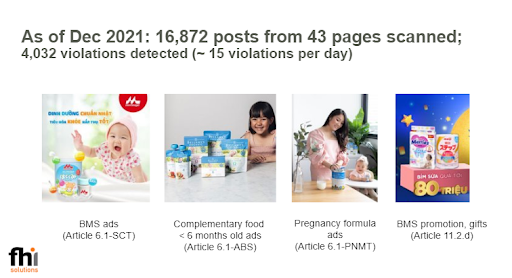
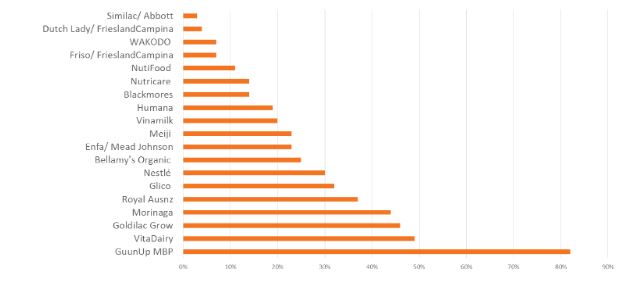
In its first year alone Vivid identified 4,032 violations and SUN CSA Vietnam now has data concerning the violations of over 20 BMS brands that sell products in Vietnam. For example, they found Japanese brands (GuunUp MBP, Morinaga, Meiji, Wakodo, Glico) have nearly 40% of their posts violating the Code. Nestle, Friesland Campina, Mead Johnson are also among violators with 15% to 30% of their posts violating the Code. Australian brands like Blackmore, Royal Ausnz, Bellamy’s Organic are also quite aggressive with nearly 20% of their posts violating the Code although they entered the market later than other brands.
Duong Vu, part of the CSA Vietnam states “we want to share this product further within the SUN CSN and think it could be food for thought for other countries.”
At only one year old, Vivid is still learning, and through repeated use will become even more efficient and effective in spotting BMS code violators. The software has been so well received that the Ministry of Information and Communications in Vietnam now wants to expand it to include tobacco marketing, something that the CSA Vietnam will be collaborating on. There are also hopes to expand further in the future to include alcohol and unhealthy food products. Currently, it has been replicated and modified to conduct Code monitoring at the global level. As more and more marketing moves into the digital world, innovations such as Vivid will level the playing field to help end exploitative marketing practices and protect a healthy and nutritious way of life.
