A special video-focused newsletter from the Scaling Up Nutrition Civil Society Network.
Budgeting for nutrition: How civil society advocacy in Malawi is getting resources to communities
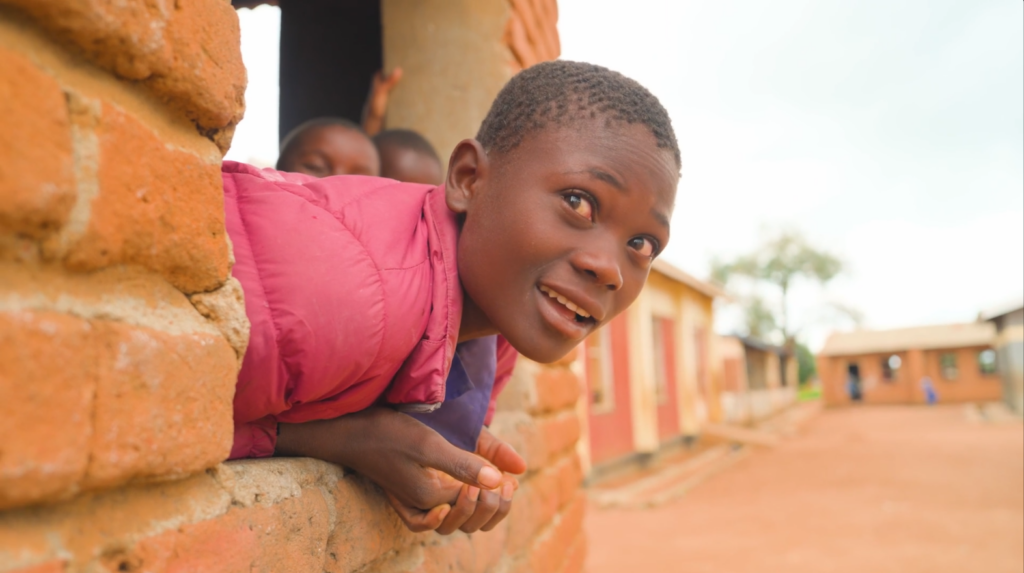
CSONA, the SUN civil society alliance in Malawi, is proving that advocacy works. By partnering with parliamentary nutrition champions and the SUN Civil Society Network, they’ve fought to secure a bigger national nutrition budget – and to make sure those resources actually reach the districts that need them most. But this isn’t just a story about politics and budgets; it’s about what happens when funding reaches communities.
In one school, a teacher sums it up perfectly: “Because when I have healthy kids, my teaching will be more effective.” From parliament to classroom, this is what change looks like.
The first in a series produced by Cloud9Media.
Closing the gender nutrition gap: lessons from Viet Nam
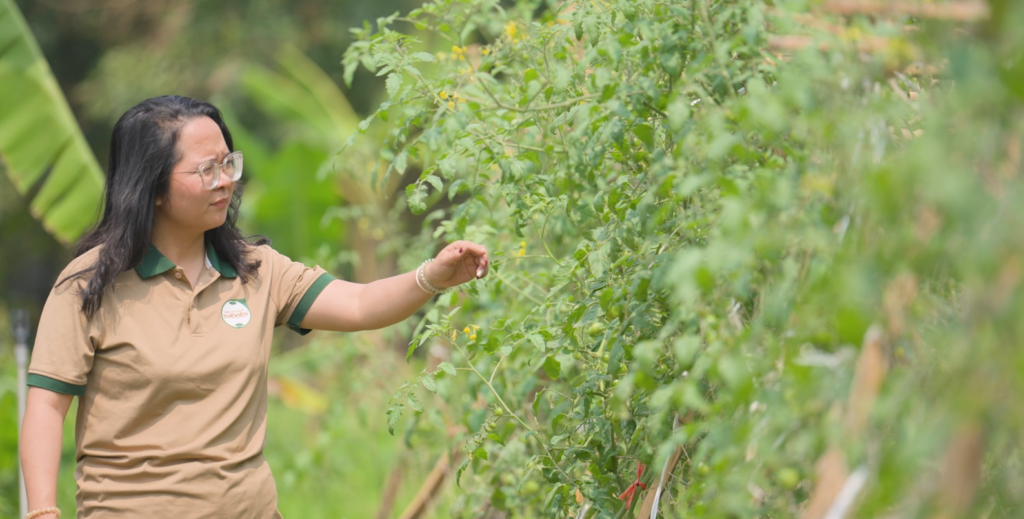
In Viet Nam, women play a central role in agriculture, food systems and community life. In many contexts, they are not only producers, but also decision-makers and drivers of change. Yet, despite this strong participation, gaps in nutrition, health and access to resources persist – particularly as climate shocks place increasing pressure on livelihoods and food systems.
This video shows how civil society in Viet Nam is addressing these interconnected challenges through locally led solutions, driven by women: improving diets, strengthening maternal and child nutrition, and building more resilient food systems. These approaches are also informing action beyond Viet Nam through the SUN Civil Society Network’s flagship peer-to-peer learning programme.
The second in a series produced by Cloud9Media.
N4G – one year later
The Nutrition for Growth (N4G) stock-take took place in Lyon in April, giving policymakers, donors and civil society the opportunity to reflect on the commitments made in Paris last year and how far we’ve all come in delivering on them. SUN CSN presented a video summing up how young people and civil society have been working to fulfill their promises and hold governments (and themselves) to account.
SUN CSN reports on progress against our N4G commitments
One year after registering our Nutrition for Growth commitments in the Nutrition Accountability Framework, SUN CSN has submitted its first progress update. This is an important accountability milestone as we continue working towards our 2028 ambitions: strengthening cross-country learning between civil society alliances, supporting youth leaders to deliver community-informed advocacy, and advancing civil society advocacy on responsible private-sector engagement in nutrition and food systems.
Our reporting shows encouraging momentum. The Flagship Learning Programme visit has been successfully implemented, with participating CSAs now preparing action plans to apply their learning in their own contexts. Our youth leadership work also continues to move forward, supported by partners across the SUN Movement and through new collaboration around Nutrition Dialogues. On responsible private-sector engagement, we have initiated discussions with partners to kick-start private-sector dialogues in at least four countries by the end of 2027.
At the same time, we have been transparent about the challenges we face, including conflict and political instability in some countries, and funding constraints affecting implementation. These commitments are not just targets on paper. They reflect our continued commitment to learning, sharing and acting together with ambition – and with accountability.
If you want to learn more about our work on accountability, a good starting point is another SUN CSN video, which looks at the commitments made at N4G in Paris in March 2025.
Help map the pressures on civil society – your voice matters
Civic space is shrinking, and Action Contre La Faim (ACF) wants to understand how it’s affecting your work. They’re inviting member organisations to complete a 25-minute questionnaire documenting the administrative, legal, and reputational pressures civil society organisations face day to day.
Your responses will feed into a collective report – available in English, French and Spanish – designed to demonstrate the cumulative impact of these pressures to governments and development banks. All data will be anonymised, and the findings will be a practical tool you can use in your own advocacy.
Share Your Voice: Survey on Health, SRHR & the Changing Aid Landscape
PAI, together with the Implementing Best Practices Network (IBP) and the Community of Practitioners on Accountability and Social Action on Health (COPASAH), is calling on civil society organisations working in health – including sexual and reproductive health and rights – to take part in their annual survey.
The survey captures how organisations are navigating the shifting global aid landscape: from funding cuts and realignments to changes in the UN system and national political contexts. It also explores civil society organisation engagement in policy and planning processes, the role of coalitions in driving lasting change, and emerging threats to family planning, safe abortion and comprehensive sexuality education.
Findings will be shared from June 2026 onwards, with the aim of ensuring CSO perspectives shape donor strategy and global health discussions throughout the year.
The survey closes 6 May – take part now in your preferred language:
🔗 English | French | Portuguese | Spanish
CFS 54: Call for Side Event Proposals
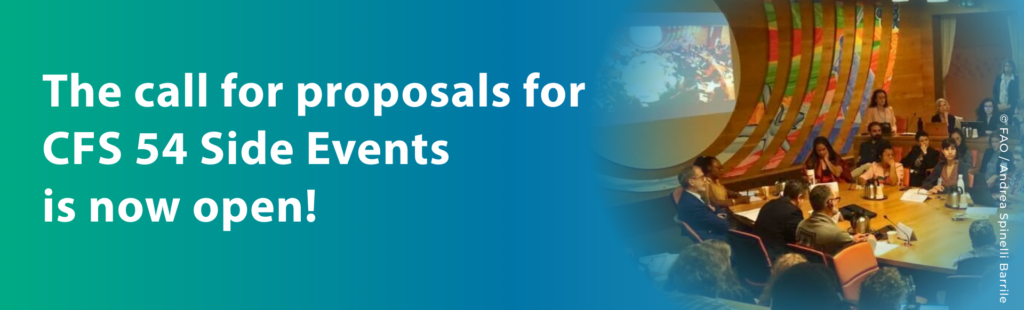
The Committee on World Food Security (CFS) Secretariat has opened the Call for Proposals for Side Events at the 54th Session (CFS 54). The submission deadline is 30 May 2026 at 23:59 CEST. Past side event programmes from CFS 52 and 53 are available for reference. Enquiries: [email protected].
Resources
The SUN CSN recognises that the funding landscape has become increasingly competitive and constrained in recent years. Identifying and approaching new grants and donors is essential to accessing available resources, and localisation is key to achieving sustainable funding. To support this, the SUN CSN has developed concise guides on engaging with various in-country donors to help unlock funding opportunities.
Approaching Donor Series
Approaching Donor Series – Embassies
Embassies are becoming more important in the funding landscape from OECD countries. Although the grant sizes do tend to be smaller, they can form a critical funder for CSAs and tend to be more sustainable as they are based locally. Please see the guides below in your respective language:
Approaching Donor Series – Private Sector
A diversified funding strategy should include the private sector. While private sector support is often transactional, these organisations can offer valuable skills, expertise, and resources beyond financial contributions to support a CSA. When engaging with private sector partners, carefully consider their reputation and alignment with your values. Please refer to the guides below in your respective language:
Alliance – A guide to global philanthropy in 2026
Philanthropy is key in this challenging funding landscape. Alliance reached out to its global network of philanthropy experts to ask their opinions on what forces will be shaping the sector this year, what funding models to keep an eye on, where the gaps will be, and predictions our readers should note. Please see the full article here:
https://www.alliancemagazine.org/analysis/a-guide-to-global-philanthropy-in-2026
Thanks for reading!
Remember to follow our LinkedIn page
Our LinkedIn page was recently relaunched. Make sure to follow our page for updates on the work of the SUN CSN and our CSAs.
Keep up to date with events hosted by SUN CSN, our members and partners
Throughout 2026 we’ll be updating our events calendar with regional and global moments where civil society can coordinate action. Please forward any relevant invitations to [email protected].
Keep up to date with all the latest SUN Movement news
If you haven’t already, check out the latest SUN Movement bulletin here and make sure you never miss an issue by signing up here.
