
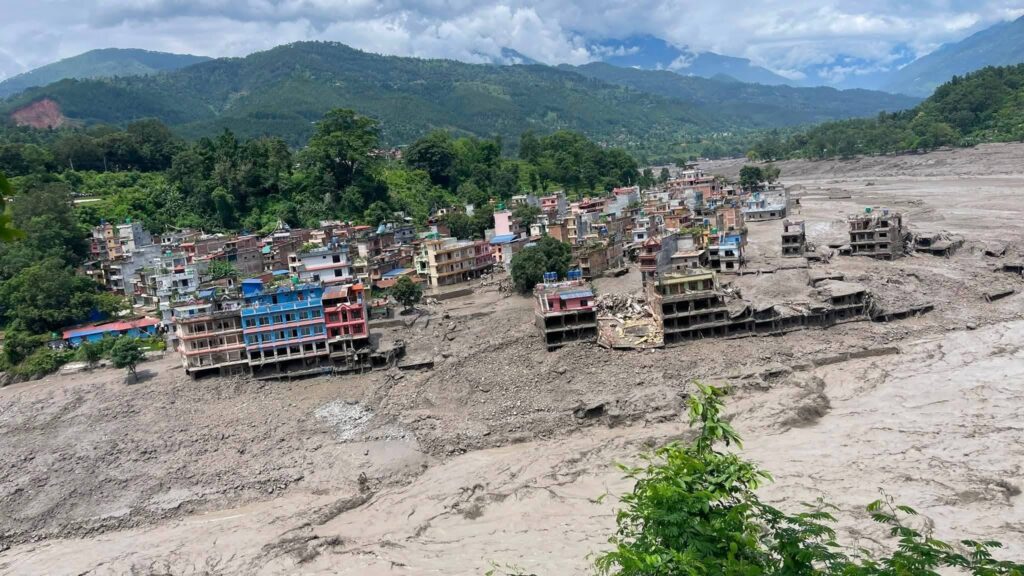
Following the devastating Bhote Koshi River floods of 26 August 2026, the Scaling Up Nutrition (SUN) Civil Society Alliance for Nutrition Nepal (CSANN) — a member of the SUN Civil Society Network — and the Nepali Technical Assistance Group (NTAG) are at the forefront of local response efforts, working through community organisations and government structures to reach affected families and ensure that nutrition, health and water, sanitation and hygiene are treated as urgent priorities.
Their message to the wider humanitarian community is clear: nutrition, WASH and access to healthcare must be prioritised as part of the emergency response from the outset.
A locally led response
CSANN and NTAG are mobilising the expertise and reach of civil society organisations already rooted in affected communities.
Their response includes work around nutrition assessment and screening, breastfeeding and infant and young child feeding support, emergency food and nutrition assistance, safe water and hygiene, health outreach, referral and community communication.
This locally led approach matters and it is not only about who delivers the response. In a rapidly evolving emergency, local organisations understand the communities they serve and the realities families were facing before the floods — including poverty, insecure livelihoods and limited access to nutritious food — and can identify where existing vulnerabilities risk being made much worse by the emergency. They also have existing relationships and networks that can ensure support reaches those most at risk.
Rather than creating parallel structures, CSANN and NTAG are working through local organisations and existing systems, strengthening the response from within.
Nutrition cannot wait
As humanitarian actors respond to the immediate destruction caused by the floods, CSANN and NTAG are warning of the risk of a second, less visible crisis if nutrition is not addressed early.
When floods contaminate water supplies and sanitation systems, diarrhoea and infectious diseases can spread rapidly. Illness can prevent children from absorbing the nutrients they need and quickly worsen malnutrition. Infants and young children face additional risks when breastfeeding and normal feeding practices are disrupted, while pregnant and breastfeeding women may themselves struggle to access sufficient nutritious food.
For children, the consequences can be particularly severe. Malnourished children are more vulnerable to infection, creating a dangerous cycle between unsafe water, illness and malnutrition. When health facilities are damaged or families cannot reach healthcare, children who are already sick or malnourished may also miss the treatment they urgently need.
If poor diets and repeated infections persist, the consequences can extend far beyond the immediate emergency. In the critical early years of life, chronic undernutrition can lead to stunting, with lasting, and in some cases, irreversible impacts on children’s physical growth, cognitive development and ability to learn and thrive.
The aim is therefore not only to treat malnutrition once it becomes severe, but to identify children at risk early and prevent their nutritional status from deteriorating. Protecting nutrition now is an investment in longer-term resilience: helping children recover, supporting families to withstand future shocks, and preventing a short-term emergency from becoming a lasting setback for communities.
This is why nutrition, WASH and health cannot be treated as separate needs in an emergency. Addressing them together is essential to prevent avoidable illness, worsening malnutrition and further loss of life.
A call to humanitarian partners and donors
The message from Nepal’s civil society is clear: local actors must be supported and resourced to lead, and nutrition must be treated as a life-saving priority alongside food, shelter, WASH and healthcare. Acting early and addressing these needs together will help prevent today’s emergency from becoming a deeper and longer-term crisis for children and families.
CSANN and NTAG are calling on humanitarian organisations, donors and partners responding to the Nepal floods to:
- make nutrition a core part of the emergency response;
- integrate nutrition, WASH and healthcare interventions wherever possible;
- prioritise the needs of young children and pregnant and breastfeeding women;
- support locally led organisations already responding in affected communities; and
- provide flexible funding and technical support so local actors can adapt as needs evolve.
The SUN Civil Society Network stands in solidarity with CSANN, NTAG and all communities affected by the floods in Nepal. Our thoughts are with those who have lost loved ones, homes and livelihoods, and with the local organisations working tirelessly alongside their communities through this crisis.
For further information and opportunities to support the response:
Deepak Thapa Chairperson, CSANN [email protected]
Nepali Technical Assistance Group (NTAG) Scaling Up Nutrition Civil Society Alliance for Nutrition Nepal (CSANN)
Technical Brief: Nepal Flood Response: Supporting Locally Led Action to Protect Nutrition, Health and WASH
