
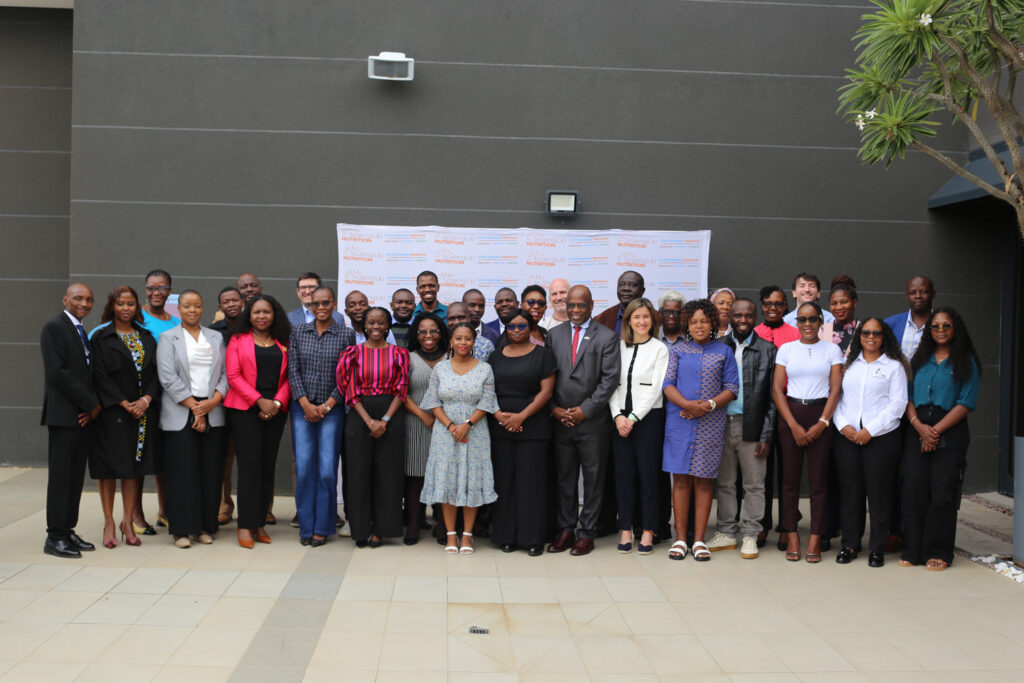
From 2–6 March 2026, representatives from 17 Scaling Up Nutrition (SUN) Civil Society Alliances (CSAs), including 12 from East and Southern Africa (ESA) and five from Anglophone West, Central Africa, and the Islands (WCAI), convened in Gaborone for a regional workshop under the theme ‘strengthening accountable food systems for nutrition security and health’, hosted by Food Bank Botswana.
Coming at an important moment – following the launch of the global SUN Civil Society Network (CSN) five-year strategy and the development of the ESA regional strategy – the workshop provided an opportunity for people to come together, share experiences, learn from each other and focus on the future.
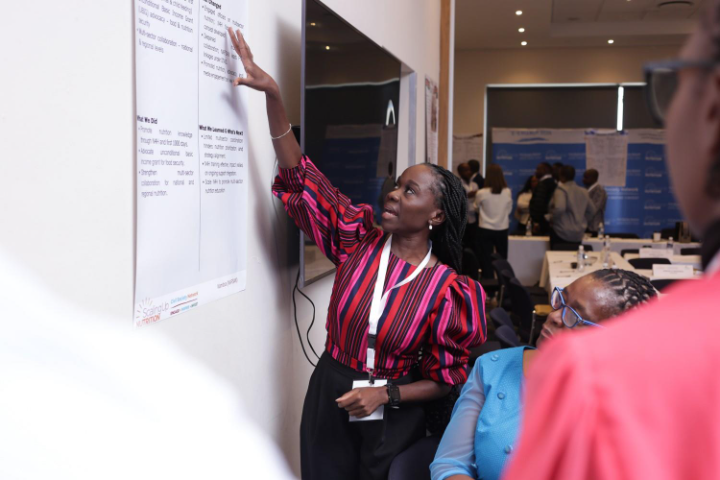
Before looking ahead, the workshop took stock of what the CSAs had achieved in the previous year 2025. The peer-learning session held on the first day showcased various advocacy successes. For example, Zimbabwe’s combination of parliamentary engagement, media outreach, and budget analysis helped drive government action toward establishing a Child Nutrition Fund; Botswana trained MPs on the right to food, elevated media engagement, and secured government adoption of a rights-based food policy – while also redistributing surplus food to communities in need; Rwanda influenced national nutrition and food security policy by embedding accountability directly into government performance contracts; Uganda embedded nutrition within its national development planning frameworks, signalling a shift from one-off interventions to long-term institutional commitment; Sierra Leone piloted nutrition-sensitive programming, established school gardens and created workplace breastfeeding rooms, drawing on peer learning facilitated by SUN CSN.
From learning to action: a shared accountability agenda
Across two days of the workshop, participants concluded their training in accountability, an increasingly central component of SUN CSN’s work and the focus of our engagement with the Nutrition for Growth (N4G) summit. Facilitated by Dr Geoffrey Lairumbi, this training began with virtual sessions in January 2026, and by the end of the regional workshop left civil society alliances better equipped not only to hold duty-bearers accountable for the commitments they have made but also to uphold their responsibilities as civil society actors. This includes working in partnership with governments and other stakeholders, strengthening transparency and driving collective action to deliver nutrition outcomes. The emphasis on mutual accountability marks a move from advocacy alone to shared ownership of results, and a significant shift from “government vs civil society” to “government with civil society ».
Lessons from Botswana and the region
Participants didn’t only learn from each other – they also heard from a rich cross-section of Botswanan society, spanning government, the private sector and the legal profession. Chawapiwa Masole made a passionate case for the right to food and the real gains civil society has achieved in pushing governments to recognise this right and act on it – a message that landed squarely with the workshop’s theme of strengthening accountable food systems for nutrition security and health.
On the sidelines of the regional workshop there was an accountability engagement event that was attended by Botswana government officials, United Nations representatives and regional organisations, including the Southern African Development Community (SADC) and the East, Central and Southern Africa Health Community (ECSA-HC), demonstrating the genuine appetite for enhanced regional cooperation to address nutrition issues. Building on this momentum, the workshop strengthened relationships that will enable more coordinated action across countries through ongoing peer-to-peer learning, joint advocacy on regional priorities, and closer alignment with regional policy frameworks. It also opened pathways for civil society alliances to engage more strategically with regional bodies, share evidence and best practices, and collaborate on tracking and advancing nutrition commitments at the country level. Together, these strengthened connections are expected to drive more cohesive, cross-border efforts to improve accountability and accelerate progress on nutrition outcomes.
« Through our partnership with the SUN CSN’s Eastern and Southern Africa regional grouping, the ECSA Health Community is bridging the gap between CSOs and governments, while fostering dialogue and South-to-South cooperation. We are also strengthening advocacy and accountability for delivering high-impact nutrition interventions in the ECSA region and beyond. » Doreen Marandu, ECSA Health Community
With all such gatherings, however, there’s a risk that a lot is said and little is done. One participant cut to the heart of it: « The future of Africa’s food systems will not be decided in high-level meetings, but in our communities. » Promises made behind closed doors aren’t enough – what matters is what happens next.
The next steps
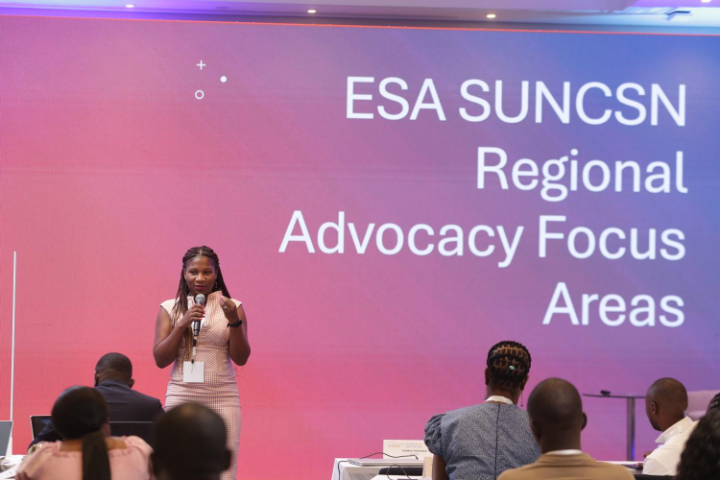
A core value of SUN CSN is that when members come together, they learn from each other and multiply their influence (reflected in our strategy). The communications and advocacy training was designed with exactly this in mind – deliberately participatory, it drew on the expertise already in the room, with CSA representatives sharing advocacy successes, discussing how to tailor messages to the right audiences, and thinking strategically about communications channels.
Over the closing days, participants worked through a range of interconnected themes – youth engagement, cross-regional cooperation and holding governments accountable for nutrition commitments – each discussion building toward something concrete. No one left with vague intentions: each participant walked away with a clear, grounded plan for the advocacy steps they will take in their country, shaped by the examples and lessons they’d heard throughout the week.
In the weeks since the workshop, participants have carried forward their learning at the country level. In Malawi, for example, what was learned in the workshop helped participants quickly connect with Members of Parliament to share budget analysis results, pointing out the drop in funding for nutrition and urging better accountability for N4G commitments, including the approval of the Food and Nutrition Bill. Similarly, in Kenya, the training has directly contributed to ongoing efforts to finalise the National Food and Nutrition Security Policy, with a clear focus on institutionalising accountability for nutrition commitments. Lesotho’s participants have shared what they learned across government, parliament, and communities – and put that knowledge into practice by setting up real-time platforms to monitor commitments. This is precisely what SUN CSN exists to make possible – and a powerful reminder that bringing people together leads to strong, sustained action.
