By Nazgol K – SUN CSN Secretariat
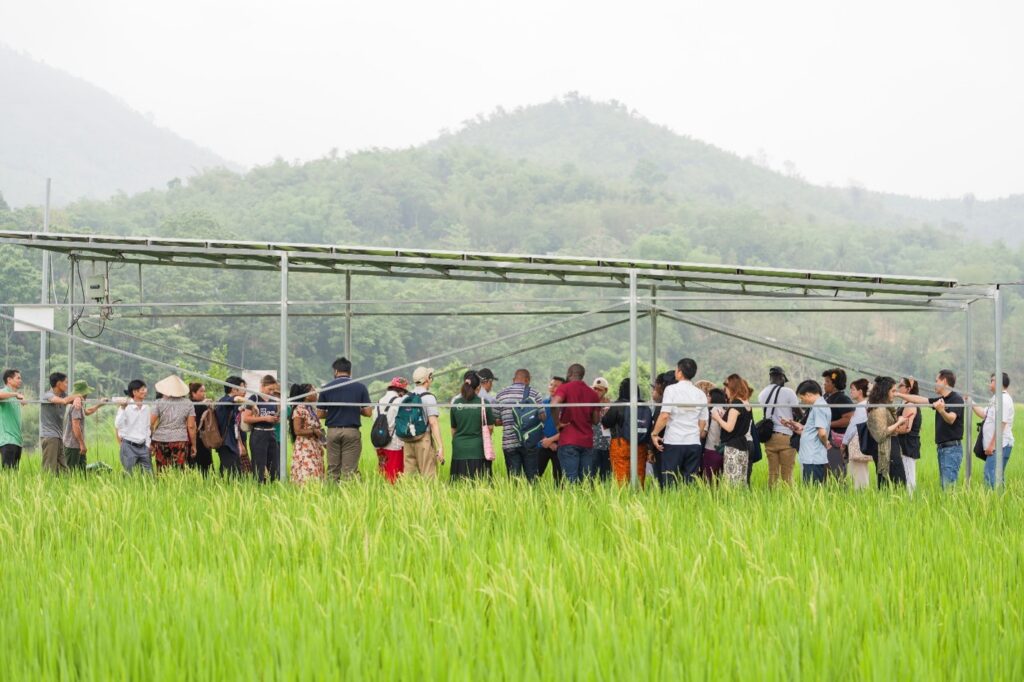
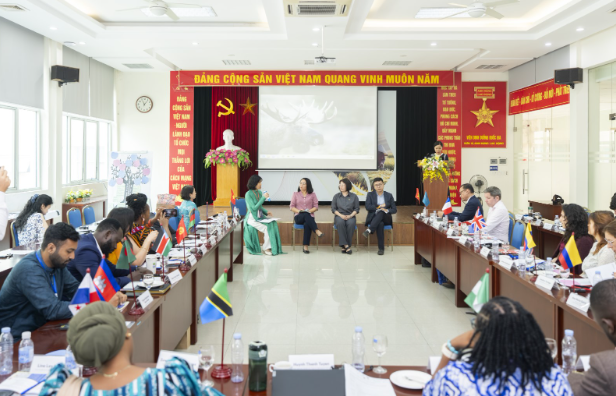
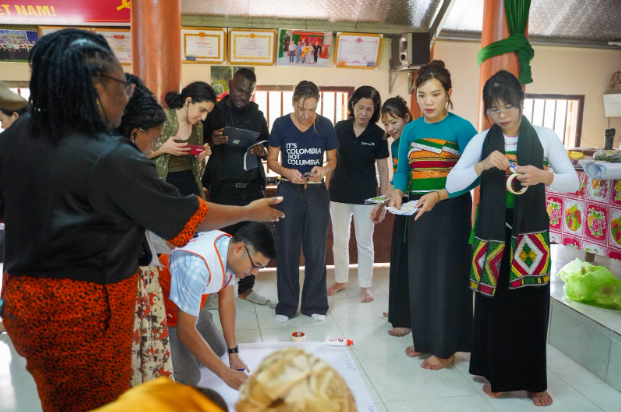
In April 2026, SUN CSN and FHI 360 co-hosted a learning visit to Viet Nam for 14 civil society leaders from Bangladesh, Cambodia, Colombia, Côte d’Ivoire, Kyrgyzstan, Liberia, Malawi, Namibia, Nepal, Nigeria, Panama, South Sudan, Tanzania and Togo. The goal of the visit was to advance gender, nutrition, and climate-resilient food systems.
Participants visited communities, engaged with practitioners and examined approaches that have contributed to Vietnam’s nutrition progress. However, the true measure of success was never what happened during the visit itself. The real question was whether participants would use the learning once they returned home.
While evidence of direct nutrition outcomes will take longer to emerge, particularly as newly funded pilot projects begin implementation, early findings from the tracer survey—a follow-up study tracking participants over time to assess post-programme outcomes—demonstrate significant changes at the levels of individual capacity, organisational practice, partnership-building, and policy influence. Most importantly, they provide strong evidence that the programme’s core theory of change is working.
The SUN CSN Learning Programme
The SUN CSN Learning Programme was created following feedback from network members who consistently called for more opportunities for in-person peer learning and stronger capacities in nutrition-sensitive programming, particularly at the intersection of nutrition, gender and climate resilience.
Rather than treating learning as a one-off event, the programme was designed around a simple premise: learning should lead to action. Participants are selected based on merit and their commitment to return home and share those lessons across their organisations, alliances, and national nutrition movements.
Since its inception, 42 members have been supported to attend three learning visits in the Philippines and Viet Nam. This has resulted in the establishment of 10 school nutrition clubs in Sierra Leone that feed at least 100 vulnerable school children with nutrient-rich produce, the first-ever workplace lactation support programme in Sierra Leone serving over 300 female healthcare workers and much more.
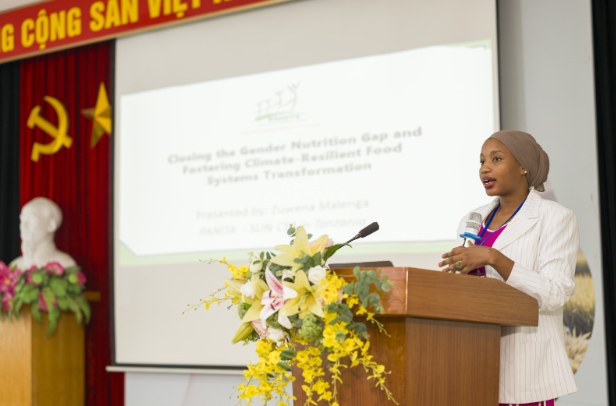
«These lessons have reshaped how we design our programmes and engage stakeholders, with a stronger focus on working collaboratively with government, development partners and communities to achieve sustainable impact.» Zuwena Malenga, Nutrition Project Officer, Partnership for Nutrition in Tanzania (PANITA) – SUN Civil Society Alliance, Tanzania.
Building an ecosystem for change
One of the strongest findings from the tracer survey is that impact is rarely attributable to a single intervention alone. Participants repeatedly described how learning from the Viet Nam visit interacted with other SUN CSN initiatives, including Seed Funding opportunities, Communities of Practice, Accountability Strengthening efforts (such as the East and Southern Africa Accountability Training) and the Youth Leaders for Nutrition Programme. Rather than operating as standalone projects, these investments are increasingly functioning as a connected ecosystem that helps alliances move from learning to implementation, advocacy and scale.
Learning from Vietnam reinforced and accelerated accountability efforts already underway through SUN CSN’s wider accountability strengthening work. Following the visit, the Civil Society Organisations Nutrition Alliance in Malawi used lessons from Viet Nam’s multisectoral governance model to advocate for stronger monitoring of Nutrition for Growth commitments and is now exploring the development of a monitoring and accountability framework.
In Liberia, learning from the Viet Nam community nutrition model was combined with approaches promoted through the SUN CSN Youth Leaders for Nutrition Programme. Together, these informed youth dialogues that engaged duty-bearers on gender-sensitive nutrition policy and strengthened advocacy for women’s and youth participation in nutrition governance.
In Tanzania, a nutrition club model – observed during the Vietnam visit – is being adapted and expanded through partnerships with local authorities. The approach now includes village savings and loan associations, women’s economic empowerment activities, climate-smart agriculture, nutrition education and household outreach to pregnant and breastfeeding women.
Six months later: the evidence is emerging
Six months after the visit, SUN CSN and FHI 360 conducted a tracer survey to assess how learning had been applied. The findings were striking.
While progress has varied across countries, with some participants constrained by funding, competing priorities and capacity limitations, almost all respondents reported applying, adapting or sharing learning in some form. This variation is not unexpected. Meaningful systems change takes time, and countries began from different starting points. What is notable is that evidence of uptake emerged across nearly all participating contexts, even before most grant-funded activities had reached full implementation.
Learning did not stay with the participants
Since April 2026, more than 500 people have already participated in trainings, briefings, workshops and knowledge-sharing events led by participants following the visit.
An estimated 4,000 additional people were reached through newsletters, social media, mailing lists and institutional communications.
In Nigeria alone, learning was shared with more than 60 national stakeholders and more than 30 subnational civil society leaders. In Panama, webinars and institutional events reached between 60 and 80 people. In Liberia, learning was shared through national coordination meetings involving government and UN actors.
All respondents stated that without the learning experience, the changes they reported would not have happened or would have been only partial. This suggests that the programme is generating additional value rather than simply accelerating activities already underway.
New knowledge is changing the way organisations work
Ten of thirteen respondents reported that the learning visit influenced their day-to-day work either moderately or to a great extent.
In Nigeria, the Gender, Climate and Nutrition (GCAN) framework has been incorporated into long-term strategic planning and will be reflected in the organisation’s 2027-2031 strategic plan.
In Bangladesh, climate-nutrition approaches are now informing project planning, advocacy efforts and community engagement processes.
In Cambodia, lessons from the programme are helping shape future project design and discussions around collaboration with development partners.
In Namibia, learning from the programme has continued to influence activities despite the absence of dedicated funding, informing SUN CSN-funded nutrition dialogues, community engagement efforts and public advocacy initiatives.
These examples illustrate an important finding: ideas introduced through the programme are becoming embedded within institutional systems and ways of working.
From learning to policy influence
The programme is also contributing to concrete policy and governance outcomes.
In Malawi, lessons from Vietnam’s multi-sectoral governance model informed advocacy around Nutrition for Growth commitments and accountability mechanisms, including engagement with the National Nutrition Coordinating Committee.
In Togo, learnings from the programme informed discussions with the Kloto 3 Municipal Council, where greater attention was drawn to agroecology, climate resilience, nutrition and food systems issues that had received comparatively less attention than infrastructure investments. Following these discussions, council members encouraged further work in these areas and expressed willingness to support related initiatives.
What is particularly notable is that these outcomes are occurring less than a year after the learning visit itself.
Learning is being adapted, not replicated
One of the most encouraging findings is that participants are not replicating approaches mechanically. Instead, they are adapting them to local realities.
Tanzania demonstrates how peer learning and catalytic funding can work together to drive local innovation. Inspired by a community nutrition model observed during the learning visit to Viet Nam, the alliance is adapting and testing the approach through the Building Strong Women and Resilient Food Systems through Community Agriculture (Mwanamke Imara) project. Household Clubs now serve as monthly learning platforms for caregivers of young children, combining nutrition education with Village Savings and Loan Associations that help women build financial resilience and invest in nutrition-sensitive livelihoods. Home gardens provide opportunities to improve dietary diversity and promote climate-smart agriculture, while community dialogues and radio programmes are engaging men and local leaders on shared decision-making, caregiving and household resource allocation.
In Nepal, lessons from the Nutrition Club model informed adaptation within the existing Nutrition Education and Rehabilitation Program (NERP), which reported 22 of 26 children recovering to normal nutritional status. The NERP camp is a community-based nutrition intervention designed to identify and rehabilitate children suffering from moderate acute malnutrition (MAM). It provides nutritious, locally available food, regular feeding sessions, nutrition education, growth monitoring, and counselling to caregivers to improve children’s nutritional status and promote healthy feeding and childcare practices.
In Liberia, the community nutrition approach inspired youth dialogues focused on nutrition governance and climate resilience, positioning young people as active agents of change.
These examples reinforce a central lesson from the programme: successful approaches travel best when they are adapted to context rather than simply replicated.
The next chapter: evidence from seed funding
In 2026, with support from GIZ, SUN CSN introduced a new component to the Learning Programme, awarding seven seed grants of up to €10,000 each to alliances in Bangladesh, Côte d’Ivoire, Kyrgyzstan, Malawi, South Sudan, Tanzania and Togo.
These grants are testing an important question: What happens when promising ideas emerging from peer learning receive resources for implementation?
Across the countries, the expected impact centres on three shared themes: climate-resilient food production, better nutrition, and stronger roles for women (and in some cases youth). Due to implementation delays, it is still too early to assess the direct impact of these grants.
While the programme is already demonstrating strong evidence of changes in knowledge, institutional practice, partnerships and policy engagement, meaningful nutrition outcomes require time to materialise.
What the early results do show is that the foundations for those outcomes are being put in place. Over the coming months, SUN CSN and FHI 360 will continue tracking how seed-funded initiatives perform and generating evidence on which approaches are most effective, scalable and sustainable.
Looking ahead
Six months after the Vietnam learning visit, one conclusion is already evident: early evidence suggests the programme’s theory of change is holding.
When the right participants are selected, equipped with practical tools, supported to develop action plans and connected through ongoing peer support, learning does not remain with a single individual. It multiplies. It influences organisations. It shapes partnerships. It informs policy discussions. And it creates the conditions for broader systems change.
As implementation of the seed grants progresses and the programme’s Community of Practice continues to grow, SUN CSN hopes to generate even stronger evidence of how peer learning can contribute to lasting improvements in nutrition, gender equality and climate resilience.
The goal is to build a global movement of civil society organisations that learn from one another, adapt what works, and collectively accelerate progress towards better nutrition outcomes for all.
