By Barbara Rehbinder, Deputy Head – Strategy & Advocacy, SUN Civil Society Network
We know a great deal about what works in nutrition. So why is progress so slow, and why are so many people left behind?
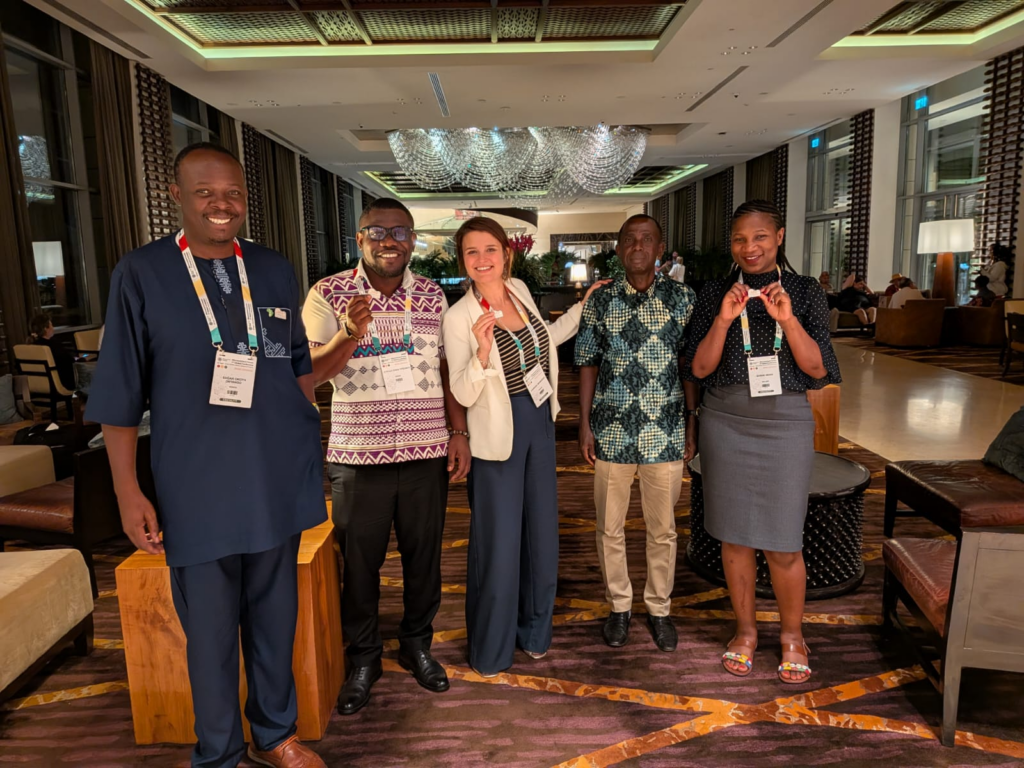
This question stayed with me throughout the 2026 Micronutrient Forum (MNF) in Accra, Ghana, where I was delighted to reconnect with Scaling Up Nutrition Civil Society Network (SUN CSN) members from Ghana, Kenya, Nigeria, Pakistan, Bangladesh and the Philippines, as well as colleagues and partners from across the world.
The Forum showcased impressive scientific advances and technical solutions. Yet one message from the opening discussions particularly resonated with me: the challenge is not simply knowing what works, but creating the political will, coordination and conditions to make it work for everyone.
The missing link between evidence and impact
The MNF has historically been a scientific gathering, and rightly so. Strong evidence is essential to guide nutrition policies and investments. But evidence alone cannot guarantee impact.
For instance, at the MNF, we explored the integration of family planning and nutrition, highlighting how closely women’s reproductive health and nutritional well-being are connected. Opportunities to link services across antenatal and postnatal care, adolescent health programmes, and community platforms already exist. Integration is within reach and does not necessarily require creating new programmes. Yet it is often held back by fragmented budgets, separate governance and planning processes, disconnected supply chains, and competing donor priorities.
Discussions on vitamin A supplementation in Kenya and Malawi also illustrated this well. Even where effective interventions exist, national coverage figures can conceal significant disparities, with marginalised and hard-to-reach communities missing out.
Closing these gaps requires functioning health systems, sustained financing, community engagement and accountability for who is being reached and who is not.
So what if we gave as much attention to the systems and power dynamics that determine who benefits as we give to the interventions themselves?
This is not about science versus politics. We need both. And while the Forum is broadening its discussions towards food systems, financing and policy coherence, technical interventions still dominated, with relatively little space for rights, advocacy, accountability and community participation.
From rights on paper to rights in practice
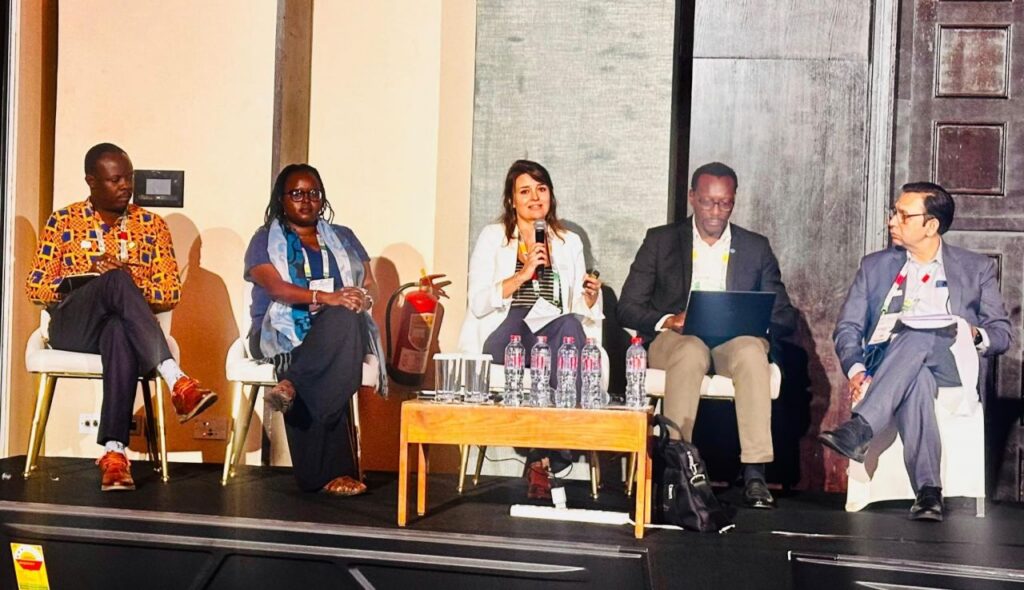
I had the opportunity to speak at one of the few sessions exploring a rights-based perspective, asking: Is a right to nutritious food possible?
My answer is yes. But recognising that right is only the beginning. The harder question is how to translate it into meaningful change. A rights-based approach asks us to see people not simply as beneficiaries of nutrition interventions, but as rights-holders, entitled to information, participation and accountability.
Yet just as effective interventions don’t always reach those who need them, neither does information about their rights or the commitments made on their behalf. However, clearly, you cannot claim a right you don’t know you have. And you cannot hold decision-makers accountable for commitments you never knew were made.
Through more than 100 Nutrition Dialogues across nearly 20 countries, SUN Civil Society Alliances and youth leaders are helping communities identify nutrition challenges, articulate priorities and bring their perspectives into policy discussions- giving them the agency to realise their rights to nutrition.
But participation alone is not enough. Were people’s concerns reflected in relevant political commitments or decisions? Were resources allocated? And most importantly… did anything change?
From commitments to action
These questions were central to a session on policy coherence, where my colleague Bessie Ndovi, SUN CSN Senior Regional Adviser for Eastern and Southern Africa, highlighted the need to look beyond commitments and pledges to what actually happens: are policies funded, implemented and delivering results?
With international aid under growing pressure, this is particularly important. Mobilising domestic resources for nutrition matters, but so does ensuring that budgets reflect people’s priorities and that funding reaches those who need it most.
Across our Network, civil society organisations and young people are bringing community evidence into decision-making spaces, then following up to monitor whether commitments are translated into action. In Malawi, for example, the Civil Society Alliance has worked with parliamentary nutrition champions to scrutinise nutrition budgets and challenge financing cuts (see our wonderful video on that topic!).
This is where our SUN Civil society Alliances can really make a difference. Rooted in communities yet connected to decision-makers, they are uniquely placed to bridge the gap between people’s lived realities and political commitments, bringing evidence from the ground, monitoring progress and demanding action.
The private sector: part of the solution, but on whose terms?
But accountability is not limited to governments. Another major theme at the MNF was the growing role of businesses in nutrition, from food fortification to food production and distribution. Businesses can help improve access to nutritious foods for sure. But we need clarity about the public health outcomes we seek, whose interests are served and what safeguards are required. In short: private sector engagement is not an end in itself.
For civil society, this raises essential questions: when should we engage businesses? When should we monitor or challenge their practices? And where should we draw clear red lines?
These questions are at the heart of SUN CSN’s work on responsible private sector engagement. We want to support Civil Society Alliances in understanding who shapes their food environments, challenging harmful practices and identifying opportunities to work with businesses where interests genuinely align.
Because the real question is not how to get more businesses involved in nutrition, but how to ensure that their influence serves people’s nutritional needs rather than the other way around.
What the next chapter needs
I left Accra encouraged by the science, innovation and commitment of so many people working to end malnutrition. But also convinced that the next chapter must be about more than scaling interventions.
We need to pay closer attention to who benefits, who makes decisions and who is accountable when commitments fall short.
That means connecting scientific evidence with lived experience, national commitments with local realities, and the different actors working towards better nutrition. The SUN Movement’s multi-stakeholder platforms provide valuable spaces for this collaboration.
Sustainable progress cannot come from delivering solutions to communities alone. It requires working with them, supporting their leadership and ensuring they have the information and influence to shape the decisions that affect them.
